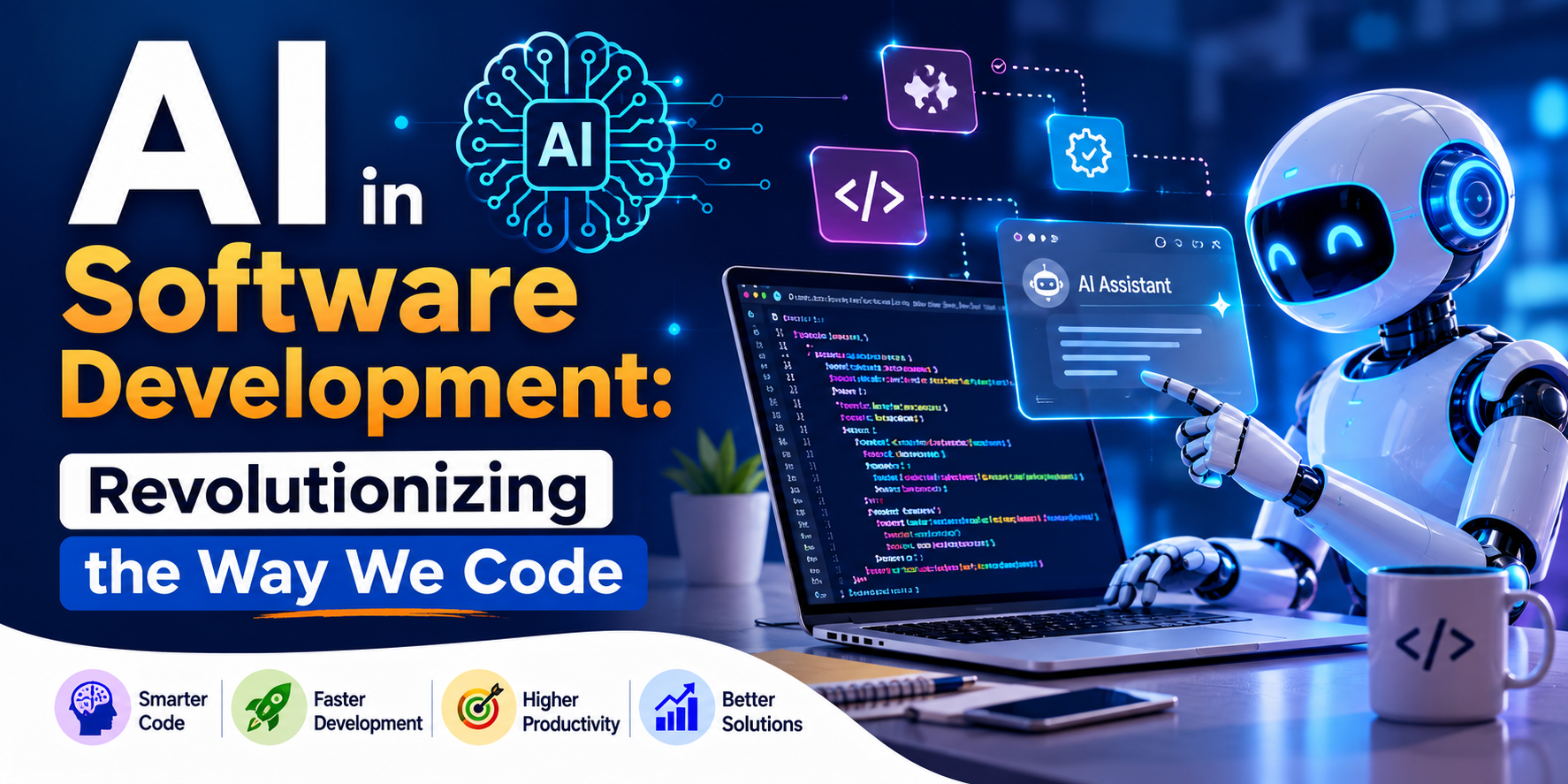
The world of software development is in constant flux. New languages emerge, frameworks evolve, and methodologies are refined. However, a seismic shift is underway, driven by the accelerating integration of Artificial Intelligence (AI). Once confined to the realms of science fiction, AI is now a tangible force, reshaping every facet of the software development lifecycle (SDLC). For developers, IT professionals, and business leaders alike, understanding the impact of AI on software development is no longer optional – it’s essential for staying competitive and innovative.
This comprehensive guide will delve into the exciting world of AI in software development. We’ll explore how AI is being used today, the tangible benefits it offers, the challenges we face, and what the future likely holds. Whether you’re a seasoned developer curious about AI’s capabilities or a manager looking to leverage these technologies, this post is designed to be your accessible, beginner-friendly roadmap.
What is AI in Software Development?
At its core, AI in software development refers to the application of AI techniques and technologies to automate, enhance, and optimize various stages of the software creation process. This isn’t about AI writing entire complex applications from scratch autonomously (yet!), but rather about intelligent systems assisting human developers, making them more efficient, creative, and less prone to errors.
Think of it as having a super-powered, intelligent assistant who can:
- Suggest code snippets and complete lines of code.
- Identify potential bugs and security vulnerabilities before they become problems.
- Automate repetitive testing processes.
- Analyze vast amounts of data to predict project risks and optimize resource allocation.
- Even help in understanding complex requirements and generating initial designs.
The goal is to augment human capabilities, freeing up developers to focus on higher-level problem-solving, architectural design, and innovation, rather than getting bogged down in mundane or time-consuming tasks.
Key Areas Where AI is Transforming Software Development
AI’s influence is far-reaching, touching almost every stage of the SDLC. Here are some of the most prominent areas:
1. Code Generation and Assistance
This is perhaps the most visible application of AI in development today. Tools like GitHub Copilot, Amazon CodeWhisperer, and Google’s Gemini are revolutionizing how developers write code. These AI-powered assistants work by:
- Predictive Text for Code: Suggesting entire lines or blocks of code as you type, based on the context of your existing code and common programming patterns.
- Code Completion: Offering intelligent suggestions for method names, variable types, and function calls, reducing typing and potential errors.
- Boilerplate Code Generation: Automatically generating repetitive code structures, such as class definitions, API endpoints, or test setups.
- Natural Language to Code: In some advanced cases, allowing developers to describe what they want in plain English, and the AI generates the corresponding code.
Benefits: Increased coding speed, reduced syntax errors, and a lower barrier to entry for new developers learning a language or framework.
2. Automated Testing and Quality Assurance
Software quality is paramount, and testing is a crucial but often labor-intensive part of development. AI is stepping in to make testing smarter and more efficient:
- Intelligent Test Case Generation: AI can analyze code and requirements to automatically generate relevant test cases, ensuring better coverage.
- Bug Detection and Prediction: AI algorithms can identify complex patterns in code that are likely to lead to bugs, flagging them for review. They can also analyze historical bug data to predict where future issues might arise.
- Automated UI Testing: AI can learn to navigate user interfaces and perform tests, adapting to UI changes without requiring constant manual updates to test scripts.
- Performance Testing Optimization: AI can help identify performance bottlenecks by analyzing application behavior under various load conditions.
Benefits: Faster feedback loops, higher quality software, reduced manual testing effort, and proactive bug prevention.
3. Debugging and Error Resolution
Debugging can be a frustrating and time-consuming process. AI is emerging as a valuable ally in identifying and fixing issues:
- Root Cause Analysis: AI can analyze error logs and application behavior to pinpoint the likely root cause of a bug, saving developers significant investigation time.
- Automated Bug Fixing (Limited): For certain types of common errors, AI can even suggest or automatically apply fixes.
- Code Anomaly Detection: AI can identify unusual patterns or deviations from normal code behavior that might indicate a lurking bug.
Benefits: Quicker issue resolution, reduced debugging time, and improved system stability.
4. Project Management and Planning
Beyond the code itself, AI is impacting the management and planning of software projects:
- Predictive Analytics for Project Timelines: AI can analyze historical project data, developer productivity, and task dependencies to provide more accurate estimates for project completion.
- Risk Assessment: AI can identify potential risks early on, such as resource constraints, scope creep, or technical challenges, and suggest mitigation strategies.
- Resource Optimization: AI can help allocate developers and other resources more effectively based on skill sets, workload, and project priorities.
- Requirement Analysis: AI can process and analyze large volumes of user feedback and requirements documents to identify key themes and potential ambiguities.
Benefits: Improved project predictability, reduced project delays, better resource utilization, and enhanced stakeholder communication.
5. Security and Vulnerability Detection
With increasing cyber threats, AI is playing a critical role in making software more secure:
- Automated Security Scanning: AI can analyze code for known security vulnerabilities and identify new, potentially unknown threats.
- Behavioral Anomaly Detection: AI can monitor application behavior in real-time to detect suspicious activities that might indicate an attack.
- Secure Code Generation: AI models are being trained to generate code that adheres to security best practices.
Benefits: Enhanced application security, proactive threat mitigation, and reduced risk of data breaches.
The Advantages of AI in Software Development
The integration of AI into the SDLC offers a multitude of benefits that are driving its rapid adoption:
- Increased Productivity and Efficiency: Automating repetitive tasks and providing intelligent assistance allows developers to accomplish more in less time.
- Improved Code Quality: AI’s ability to detect bugs, vulnerabilities, and anti-patterns leads to more robust and reliable software.
- Faster Time to Market: Streamlined development processes, faster testing, and more accurate planning contribute to quicker product releases.
- Reduced Costs: By increasing efficiency and minimizing errors, AI can lead to significant cost savings in development and maintenance.
- Enhanced Developer Experience: AI tools can reduce developer frustration by handling tedious tasks and providing helpful suggestions, allowing them to focus on more creative and challenging aspects of their work.
- Innovation Acceleration: With more time and less friction, development teams can focus on building innovative features and exploring new solutions.
Challenges and Considerations
While the benefits are compelling, the integration of AI in software development is not without its challenges:
- Data Requirements: AI models, especially for code generation and bug detection, often require vast amounts of high-quality training data.
- Bias in AI Models: AI models can inherit biases from the data they are trained on, potentially leading to unfair or discriminatory code suggestions or outcomes.
- Over-Reliance and Deskilling: There’s a concern that over-reliance on AI tools could lead to a decline in fundamental coding skills or a lack of critical thinking among developers.
- Explainability and Trust: Understanding how an AI model arrives at a particular suggestion or decision can be difficult (the “black box” problem), making it challenging to build trust in its outputs.
- Security of AI Tools: The AI tools themselves can be targets for security breaches, and the code they generate needs to be carefully reviewed.
- Integration Complexity: Integrating AI tools seamlessly into existing development workflows can be complex and require significant effort.
- Cost of Implementation: While AI can reduce costs in the long run, the initial investment in AI tools and infrastructure can be substantial.
The Future of AI in Software Development
The trajectory of AI in software development is clearly upward. We can anticipate several key trends:
- More Sophisticated Code Generation: AI will become even better at understanding complex requirements and generating more complete and context-aware code.
- AI-Powered Debugging and Self-Healing Systems: AI will move beyond detection to actively debug and even self-heal applications in real-time.
- Hyper-Personalized Development Tools: AI will learn individual developer styles and preferences to offer even more tailored assistance.
- Democratization of Development: AI could lower the technical bar further, enabling more people to contribute to software creation.
- AI as a Collaborative Partner: AI will evolve from a tool to a true collaborator, participating in design discussions and architectural planning.
- Automated Maintenance and Evolution: AI could take on a significant role in maintaining and evolving existing software systems over time.
The role of the human developer will undoubtedly evolve. Instead of writing every line of code, developers will increasingly act as architects, reviewers, and orchestrators, guiding and validating the outputs of AI systems, and focusing on the creative, strategic, and problem-solving aspects that AI cannot yet replicate.
Conclusion
Artificial Intelligence is not just a buzzword in the software development industry; it’s a transformative force. From augmenting developer productivity with intelligent code assistants to ensuring higher quality through advanced testing and debugging, AI is fundamentally changing how software is conceived, built, and maintained. While challenges remain, the advantages of increased efficiency, improved quality, and accelerated innovation are undeniable.
Embracing AI in software development is about augmenting human potential, not replacing it. It’s about building better software, faster and more reliably, by working smarter, not just harder. As AI continues to mature, its impact will only grow, making it an indispensable part of the modern software development toolkit. For those in the field, staying informed and experimenting with these powerful new tools will be key to navigating and shaping the future of technology.
Frequently Asked Questions (FAQ)
What are some popular AI tools for software development?
Some of the most popular AI tools include GitHub Copilot, Amazon CodeWhisperer, Google’s Gemini (for various AI tasks including coding assistance), Tabnine, and tools integrated into IDEs like IntelliJ IDEA and Visual Studio for intelligent code completion and debugging.
Will AI replace software developers?
It’s unlikely that AI will completely replace software developers in the foreseeable future. Instead, AI will act as a powerful assistant, automating mundane tasks and augmenting human capabilities. The role of the developer will likely shift towards more complex problem-solving, architectural design, and AI oversight.
How can I start using AI in my software development workflow?
Start by exploring AI-powered code completion tools available for your IDE. Experiment with AI assistants for code generation and documentation. Look into AI-driven testing frameworks and security scanning tools. The key is to start small, experiment, and see how these tools can best complement your existing processes.
What are the ethical considerations of using AI in software development?
Ethical considerations include potential biases in AI-generated code, intellectual property issues, the “black box” problem of understanding AI decisions, and the risk of over-reliance leading to deskilling. It’s crucial to maintain human oversight and critical review of AI outputs.
What skills should developers focus on as AI becomes more prevalent?
Developers should focus on problem-solving, critical thinking, architectural design, understanding complex systems, prompt engineering for AI tools, and the ability to effectively integrate and manage AI-driven workflows. Domain expertise and strong communication skills will remain vital.
Recent Comments