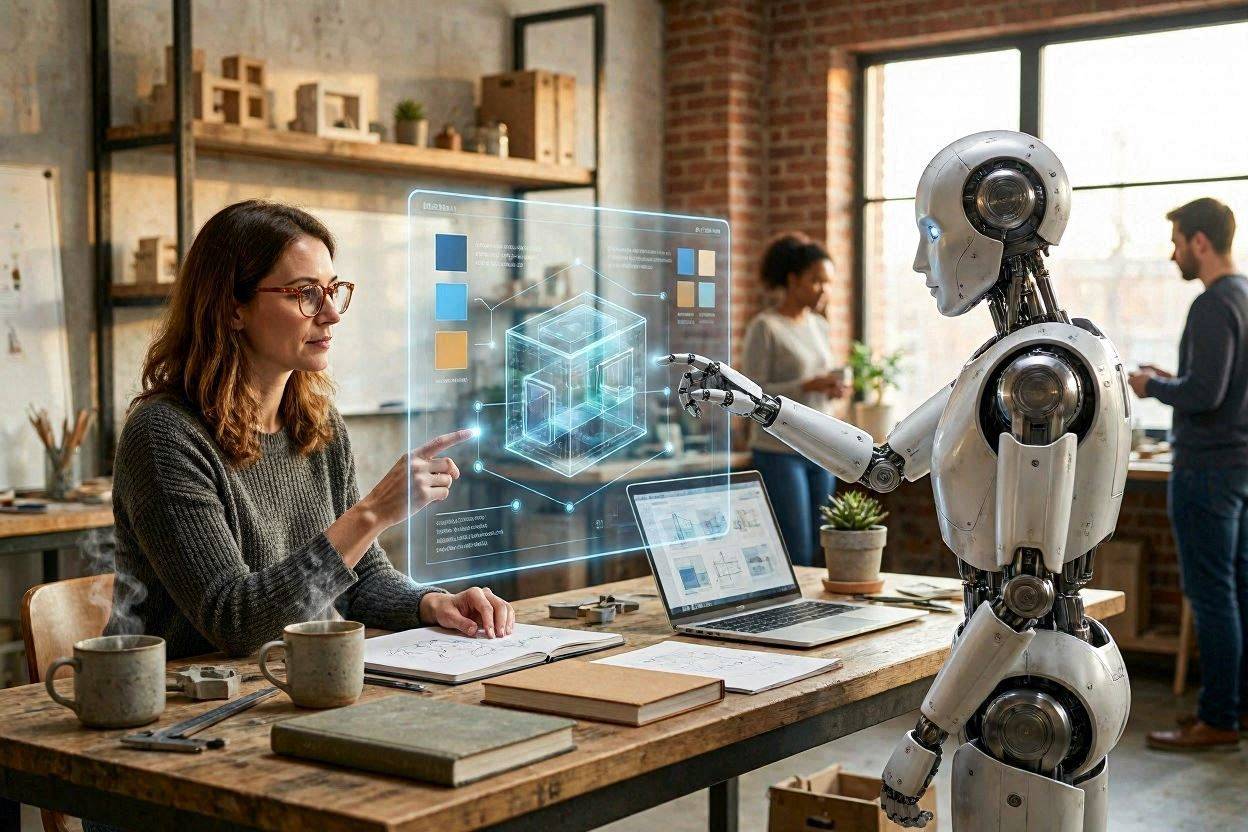
The landscape of work is undergoing a seismic shift, and at its epicenter lies the burgeoning synergy between humans and artificial intelligence (AI). Far from the dystopian narratives of robots replacing us, the reality is far more nuanced and, frankly, exciting. Human-AI collaboration isn’t about one superseding the other; it’s about a powerful partnership where each brings their unique strengths to the table, unlocking unprecedented levels of productivity, creativity, and problem-solving. This blog post will explore what human-AI collaboration entails, its immense benefits, and how you can embrace this transformative evolution.
What is Human-AI Collaboration?
At its core, human-AI collaboration is the concept of humans and AI systems working together to achieve a common goal. This isn’t a passive relationship; it’s an active and dynamic interplay. AI, with its ability to process vast amounts of data at lightning speed, identify patterns, and automate repetitive tasks, complements human strengths such as critical thinking, emotional intelligence, creativity, and complex decision-making. Think of it as a super-powered team where the AI handles the heavy lifting of data analysis and routine processes, while the human expert provides the strategic direction, ethical oversight, and innovative spark.
Here are some key aspects of this collaboration:
- Augmentation: AI tools can enhance human capabilities, making us faster, more accurate, and more insightful.
- Automation: AI can take over mundane, repetitive, and time-consuming tasks, freeing up humans for more strategic and engaging work.
- Insight Generation: AI can analyze complex datasets to reveal hidden patterns and provide actionable insights that humans might miss.
- Decision Support: AI can present data-driven recommendations, empowering humans to make more informed and effective decisions.
- Co-creation: Humans and AI can work together to generate new ideas, designs, and solutions.
Why is Human-AI Collaboration Crucial for the Future of Work?
The benefits of this collaborative approach are manifold and extend across various industries and roles. Embracing human-AI collaboration isn’t just a competitive advantage; it’s becoming a necessity for survival and growth in the modern economy.
Boosted Productivity and Efficiency
One of the most immediate and tangible benefits is the significant increase in productivity. AI can handle tasks that would take humans days or weeks in mere minutes. This includes:
- Data Analysis: AI can sift through massive datasets to identify trends, anomalies, and key insights, accelerating the research and development process.
- Customer Service: Chatbots and AI-powered assistants can handle a large volume of customer inquiries, providing instant support and freeing up human agents for complex issues.
- Process Automation: Routine tasks like data entry, report generation, and scheduling can be automated, reducing errors and saving valuable human time.
- Content Creation: AI can assist in drafting emails, reports, and even marketing copy, providing a starting point for human refinement.
Enhanced Creativity and Innovation
While often seen as purely analytical, AI can also be a powerful catalyst for human creativity. By providing novel perspectives, generating variations on a theme, or suggesting unexpected connections, AI can push human innovation to new frontiers.
- Design and Art: AI tools can generate countless design concepts, color palettes, and artistic styles, serving as a muse for designers and artists.
- Problem Solving: AI can explore a wider range of potential solutions to complex problems than humans might conceive of independently.
- Ideation: AI can analyze market trends and customer feedback to suggest new product ideas or service enhancements.
Improved Decision-Making
In a world awash with data, making the right decisions can be challenging. AI’s ability to analyze vast amounts of information and identify subtle correlations provides humans with invaluable data-driven insights. This leads to:
- Reduced Bias: While not entirely free from bias, AI can help mitigate human cognitive biases in decision-making processes.
- Predictive Analytics: AI can forecast future outcomes based on historical data, allowing for proactive planning and risk mitigation.
- Personalized Experiences: AI can analyze user behavior to tailor recommendations and experiences, improving customer satisfaction.
Upskilling and Reskilling Opportunities
The rise of AI doesn’t necessarily mean job displacement. Instead, it presents a significant opportunity for individuals to upskill and reskill, focusing on tasks that require uniquely human attributes. The future workforce will likely see a demand for individuals who can effectively manage, interpret, and leverage AI tools.
- New Roles: Emergence of roles like AI trainers, AI ethicists, and AI system managers.
- Focus on Soft Skills: Increased value placed on critical thinking, creativity, collaboration, and emotional intelligence.
- Lifelong Learning: A culture of continuous learning will be essential to adapt to evolving AI capabilities.
Examples of Human-AI Collaboration in Action
Human-AI collaboration is no longer a futuristic concept; it’s actively reshaping industries today:
- Healthcare: AI assists doctors in diagnosing diseases from medical images, personalizing treatment plans, and predicting patient outcomes. Radiologists use AI to flag potential anomalies in X-rays and MRIs, allowing them to focus their expertise on critical areas.
- Finance: AI algorithms detect fraudulent transactions, provide personalized investment advice, and automate customer service inquiries. Financial analysts leverage AI to identify market trends and manage risk.
- Manufacturing: AI-powered robots work alongside human technicians on assembly lines, improving efficiency and safety. AI also optimizes supply chains and predicts equipment maintenance needs.
- Marketing: AI analyzes customer data to personalize marketing campaigns, optimize ad spend, and predict consumer behavior. Marketers use AI-generated insights to craft more effective messaging.
- Education: AI-powered tutoring systems provide personalized learning experiences, identify student learning gaps, and automate grading for certain assignments. Teachers can then focus on providing individualized support and engaging in higher-level instruction.
Challenges and Considerations
While the potential of human-AI collaboration is immense, it’s not without its challenges. Navigating these will be crucial for successful integration:
- Ethical Concerns: Ensuring fairness, accountability, and transparency in AI systems is paramount. We must address potential biases in AI algorithms and ensure responsible data usage.
- Job Displacement Fears: While AI can create new jobs, there’s a valid concern about the displacement of existing roles. Proactive strategies for reskilling and upskilling the workforce are essential.
- Data Privacy and Security: Protecting sensitive data used by AI systems is critical. Robust security measures and clear data governance policies are needed.
- Integration Complexity: Seamlessly integrating AI tools into existing workflows and ensuring they are user-friendly for human collaborators requires careful planning and execution.
- Over-reliance: It’s important to maintain human oversight and avoid blindly trusting AI outputs without critical evaluation. The human element of judgment and intuition remains irreplaceable.
The Future is Collaborative
The narrative of AI replacing humans is rapidly evolving into one of AI augmenting humans. The future of work will be characterized by deep, symbiotic relationships between human intellect and artificial intelligence. Businesses that embrace this collaborative paradigm will be better equipped to innovate, adapt, and thrive in an increasingly complex and data-driven world. Individuals who proactively engage with AI tools and develop the skills to work alongside them will find themselves at the forefront of opportunity.
The key to unlocking the full potential of human-AI collaboration lies in fostering an environment of continuous learning, ethical development, and a clear understanding of how each party can contribute to shared success. It’s a journey of discovery, adaptation, and ultimately, a more intelligent and efficient way of working.
Frequently Asked Questions (FAQ)
What are the main benefits of human-AI collaboration?
The main benefits include boosted productivity and efficiency, enhanced creativity and innovation, improved decision-making, and opportunities for upskilling and reskilling.
Will AI replace human jobs?
While AI will automate certain tasks, it’s more likely to transform jobs and create new roles. The focus will shift towards human skills like critical thinking, creativity, and emotional intelligence, working in tandem with AI tools.
How can I prepare for a future of human-AI collaboration?
Focus on developing your critical thinking, problem-solving, and creative skills. Become comfortable with using AI tools and understand how they can augment your work. Embrace lifelong learning and be open to acquiring new skills.
What are the ethical considerations of AI in the workplace?
Ethical considerations include ensuring fairness and transparency in AI algorithms, addressing potential biases, protecting data privacy and security, and maintaining human oversight to prevent over-reliance.
Can AI really be creative?
AI can assist in the creative process by generating ideas, exploring variations, and offering novel perspectives. However, true creativity, including emotional depth and conceptual breakthroughs, still largely resides with humans, who can then leverage AI as a powerful creative tool.